


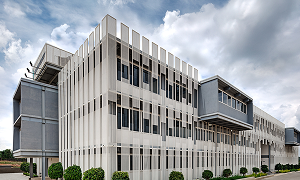



B.Arch – Bachelor of Architecture
The Bachelor of Architecture (B.Arch) programme is an undergraduate degree that prepares students for a career in architecture. It is a comprehensive and rigorous programme that combines artistic, technical, and theoretical knowledge to develop the skills necessary for designing and constructing buildings.
Duration
5 years
Programme Type
Full-time
Programme Fees
₹75,000
Programme Structure 2025
B.Arch Programme Structure 2023 – Under review by the Academic Council. Updated list will be shared once approved by 12 June.
Eligibility Criteria
Candidates should have passed the 10+2 examination with at least 50% aggregate marks overall and 50% aggregate in Physics, Chemistry, and Mathematics from a recognised board.
OR
Candidates should have passed a 10+3 Diploma examination with Mathematics as a compulsory subject and with at least 50% aggregate marks (45% in the case of SC/ST/OBC students).
The candidate must qualify for an aptitude test in Architecture (NATA) or JEE Mains (Paper 2) or any other entrance test conducted by the State or Central Government. Refer to www.nata.in for the latest updates on dates and other details.
Scope & Objective
- Architecture is the art and science of designing buildings and other physical structures. It requires mathematical proficiency, technical skills, and artistic ability.
- The Bachelor of Architecture (B.Arch.) programme offered by CMR University – School of Architecture, Bengaluru, is grounded in the fundamentals of architectural theory and practice and responds to evolving definitions of architecture in Indian and global contexts.
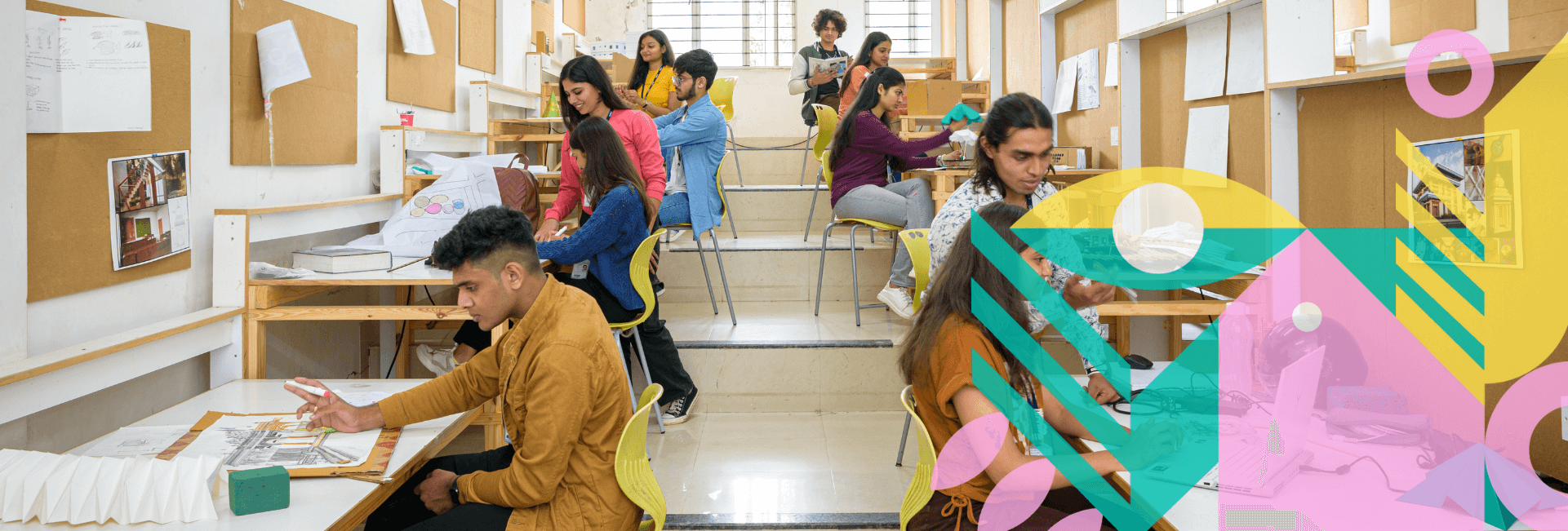
- The emphasis on ‘Practice to Theory’ and ‘Theory to Practice’ makes the B.Arch. programme competitive and relevant. The maker-centred pedagogy integrates directed, experiential, hands-on, reflective, and independent learning.
- As a systemic interdisciplinary course, it focuses on creative problem-solving and instils self-motivation to learn. It imparts the knowledge and skills required to design built environments for human habitation.
- CMR University – one of the best universities among the architecture colleges in Karnataka – enhances students’ creativity and prepares them for an innovative profession. This five-year programme blends theoretical and practical learning, exposing students to a wide range of techniques and skills required for a successful career.
- To become an architect, one must typically earn a professional degree in architecture (usually 5–7 years) and pass a licensure examination.
Programme Structure
SEMESTER I
Architectural Design I
Building Construction & Materials I
Graphics I
Early Civilisations – Art, Culture & Architecture
Structures I
Basic Design I
Visual Arts
Foundation Workshop I
Mid Semester Workshop I
SEMESTER II
Architectural Design II
Building Construction & Materials II
Graphics II
History of Architecture I
Structures II
Basic Design II
Art Appreciation
Surveying & Levelling
Mid Semester Workshop II
SEMESTER III
Architectural Design III
Building Construction & Materials III
Foundation Workshop II
History of Architecture II
Structures III
Theory of Architecture I
Computer Applications I
Climatology
Mid Semester Workshop III
SEMESTER IV
Architectural Design IV
Building Construction & Materials IV
Building Services I (WaterSupply& Sanitation)
History of Architecture III
Structures IV
Theory of Architecture I
Computer Applications II
Elective I
Mid Semester Workshop IV
SEMESTER V
Architectural Design V
Building Construction & Materials V
Building Services II(Electricity & Illumination)
History of Architecture IV
Structures V
Sociology & Economics
Foundation Workshop III
Elective II
Mid-Semester Workshop V
SEMESTER VI
Architectural Design VI
Building Construction & Materials VI
Building Services III(Ventilation, AC, Lifts & Fire)
Contemporary Architecture
Structures VI
Estimating & Costing
Working Drawing
Elective III
Mid-Semester Workshop VI
Study Tour
SEMESTER VII
Professional Training
SEMESTER VIII
Architectural Design VII
Building Construction &Materials VII
Building Services IV
Physical Planning
Structures VII
Professional Practice I
Interior Design
Elective IV
Mid Semester Workshop VII
SEMESTER IX
Architectural Design VII
Building Construction &Materials VII
Construction Management
Dissertation
Disaster Resistant Structures
Professional Practice II
Landscape Architecture
Elective V
Mid Semester Workshop VIII
SEMESTER X
Architectural Design Project / Thesis
Programme Assessment
The university follows the Choice-Based Credit System (CBCS), allowing students to choose courses and earn credits based on performance.
- Grades and GPA
Grades are awarded for each course, and Semester Grade Point Average (SGPA) is used to measure performance each term. The Cumulative Grade Point Average (CGPA) evaluates overall performance across semesters. - Prescribed Curriculum
Each programme follows a prescribed Scheme of Teaching and Evaluation, including required courses, labs, and MOOCs. SWAYAM courses may also be included. - Auditing Courses
Students may audit courses to gain additional exposure without grade pressure—beneficial during placements. - Evaluation System
Evaluation is continuous and comprehensive, comprising Continuous Internal Evaluation (CIE) and Semester End Examination (SEE), each accounting for 50% of the total marks. - Assessment Methods
Faculty may choose assessment methods such as assignments, seminars, group discussions, practicals, or case studies, with appropriate weightage. - Semester End Examination
Conducted for all registered courses at the end of each semester. Certain courses assessed via continuous evaluation may not require a final exam. - Makeup Examinations
Students who do not clear the Semester End Examination may attempt makeup exams to improve their grades.
Programme Outcome
- Synthesise client requirements with personal design ideology to create a programme brief.
- Advise clients on statutory requirements related to the site.
- Apply site analysis and zoning skills.
- Design a range of building typologies: residential, industrial, commercial, transportation, governmental, etc.
- Integrate structural and service systems in design.
- Adapt designs to evolving societal needs.
- Appreciate allied fields such as Urban Design, Landscape Architecture, Visual Communication, and Industrial Design.
Course Outcomes Visit
What expertise do you gain?
- Architectural Design
- Building Construction and Materials
- Urban Planning and Design
- Sustainable Architecture
- Structural Systems and Analysis
- Interior Design Fundamentals
- Digital Modelling and Visualisation
- Landscape Architecture
- Heritage Conservation
- Project Management and Professional Practice
- Building Regulations
- Engineering Practices
- Effective Communication
- Leadership
- Critical Thinking





Placements at CMR University
CMR University, Bengaluru, has established a training and placement centre in each of its institutes headed by a Senior Professor and Director. The Training and Placement Centre understands the pulse of the corporate world and is helping students prepare for their careers. Exclusive training Programmes in soft skills and aptitude along with online tests are given to students to make them assess skills in broader areas.
Click here for more details
Testimonials



How to apply?
Admissions to the B.Arch programme at CMR University can be completed online or offline. Download the application form from the website and submit it either online or in person at the campus with the application fee. Alternatively, collect and submit the form directly at the Admissions Office.
Apply NowMore Programmes at the School of Architecture (SOA)








FAQs
A professional degree in architecture (5–7 years), followed by a licensure exam, is required to become a licensed architect.
Strong analytical and problem-solving abilities, creativity, attention to detail, teamwork, and communication skills.
Career options include architect, urban planner, interior designer, landscape architect, BIM specialist, project manager, and more.
Graduates may enter fields such as construction, product design, interior design, animation, VFX, or pursue postgraduate studies and research.
Construction, design, heritage conservation, teaching, and project management are common pathways.
Creative thinking, design and structural knowledge, communication, negotiation, and customer service. The School of Architecture offers training and placement support.
Candidates can apply online or offline. Submit the filled form and application fee through the university website or in person.
